Spread of Information
The method that data was shared and disseminated was revolutionized by ARPANET, which had a significant impact on how quickly information spread. It introduced a decentralized network architecture that made it possible to transmit information quickly and effectively across very long distances. As it can instantaneously access data, it was seen as a development in communication technology. Now, the prior issues of space and time were solved for the transmission of information. And by providing a platform for people, groups, and institutions to easily share knowledge, cooperate, and access resources, ARPANET lay the groundwork for the Internet. It enabled the quick distribution of ideas, news, and research by creating a global network that linked people from many locations and backgrounds. It is impossible to exaggerate the significance of ARPANET for the dissemination of information because it sparked a paradigm change in communication and paved the way for the information age we live in today.
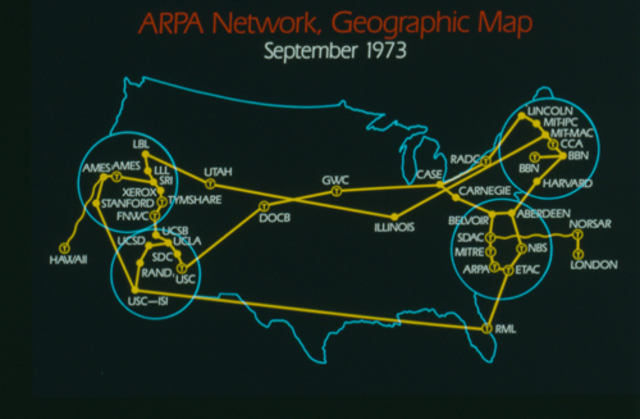
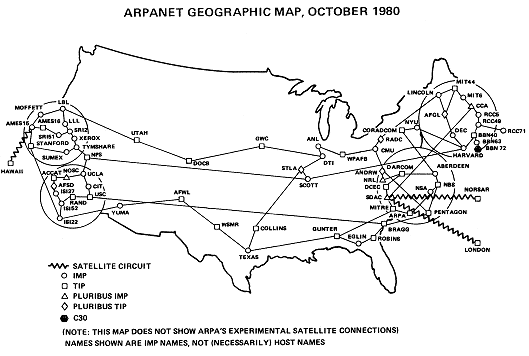
“By the end of 1975, twenty-nine sites were connected to the ARPANET. This early network is now an operational resource supporting a large and growing research community in the computer science and related disciplines. -Vint Cerf and Robert Kahn”
“I sit down at my desk and I try to log in, and it said, “One prior failed attempt.” I knew that it wasn’t me, but I knew we had logs that kept track. I asked the system administrator to look into it. He identified that the failed attempt came from a military research laboratory on the other side of the country. -STEVE CROCKER”
In the early days of the military Arpanet, my daughter was studying in Nicaragua. Because the U.S. was essentially at war with them, contact was difficult. I managed to use MIT's Arpanet connection, and she found one, so we could communicate thanks to the Pentagon! -Noam Chomsky